- Home
- About Us
-
Products
- National Zero Till Seed Cum
Ferti Drill - National Zero Till Happy Seeder
- National Zero Till Multi Crop
Planter for 2 Wheel Tractor
(Direct Hitch/Power Tiller) - National Direct Seeder for
Rice (Multi Crop) - National Seed Cum Fertilizer Drill
- National Multi Crop Planter
- National Multi Crop Planter for
Mini Power Tiller - National Multi Crop Ridge Planter
- National Raised Bed Planter
- National Pneumatic Planter
- National Fertilizer Spreader
- National Vegitable Nursery
Transplanter - National Axil Flow Vegetable
Seed Extractor - National Grond Nut Digger
- National Post Hole Digger
- National Maize Sheller
No-Tillage Equipment
Tillage Equipment
Ridge Planter Equipment
Bed Planter Equipment
Precision Planter Equipment
Fertilizer & Nursery Equipment
Specialized Seed Extractors
& Vegetable Equipme
Urea Deep Placement
- National Zero Till Seed Cum
- Blogs
- Awards
- Career
- Gallery
Contact Us
Become a Dealer
Become a Vendor
How to Prevent Seed Damage During Sowing
21, February, 2026
How to Prevent Seed Damage During Sowing
For every farmer, the journey to a successful harvest begins with a single, tiny unit: the seed. However, many people don't realize that the sowing process itself can be a high-risk period.
Seed damage during sowing is a common yet avoidable problem that can significantly reduce germination rates and, ultimately, your profits.
In this blog, we will explore why seed health matters, what causes damage during planting, and how you can use modern technology like the National Pneumatic Planter to ensure every seed has the best start possible.
Why Seed Integrity is Critical
When a seed is physically damaged. Whether it is cracked, crushed, or its outer coat is nicked. It becomes vulnerable. Damaged seeds are more likely to rot in the soil, fall victim to soil-borne pests, or fail to sprout altogether.
Even if a damaged seed does germinate, the resulting plant is often weaker and less productive.
By focusing on safe seed handling and precision sowing, you are essentially protecting your investment.
Common Causes of Seed Damage
Before we look at solutions, we must understand the "enemies" of the seed during the sowing process:
- Mechanical Impact: Rough handling by old or poorly maintained machinery can crush delicate seeds.
- Improper Metering: If the seed drill's metering system is too tight or uses aggressive metal brushes, it can grind the seeds.
- Soil Friction: In zero-till conditions, if the furrow opener isn't sharp or properly aligned, the seed might be dragged against hard soil clods.
- Excessive Speed: Sowing too fast can lead to seeds bouncing within the tubes or hitting the ground with too much force.
Top Strategies to Prevent Seed Damage
1. Choose the Right Equipment
The most effective way to prevent damage is to use machinery designed with "seed safety" in mind. Traditional drills often use mechanical fingers that can pinch seeds. Modern solutions, such as the National Seed cum Fertilizer Drill, are engineered to move seeds gently from the hopper to the ground.
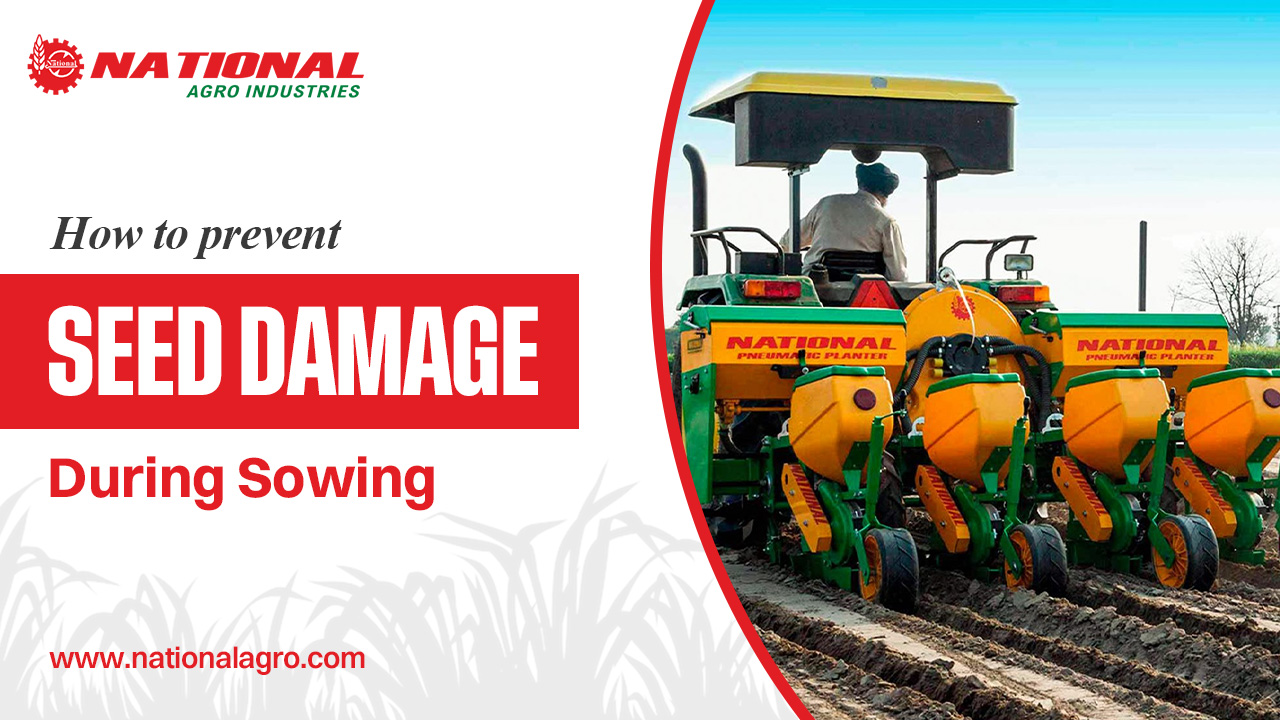
If you are dealing with expensive, delicate seeds like maize or sunflower, a pneumatic system is superior. The National Pneumatic Planter uses air pressure to pick up and drop seeds, virtually eliminating mechanical contact and friction.
2. Regular Maintenance and Calibration
Before the season starts, check your equipment. Rusty hoppers or worn-out tubes can catch and scar seeds. Ensure that the metering plates are appropriate for the size of the seed you are planting.
You can learn more about the technical specifications of high-end equipment in our product catalogue.
3. Manage Soil Moisture and Preparation
Sowing into soil that is too dry and hard can cause physical abrasion to the seed coat. Conversely, extremely wet soil can lead to "clogging" in the tubes, which forces the machine to work harder and potentially crush seeds.
For those practicing conservation agriculture, using a National Zero Till Happy Seeder allows for sowing directly into heavy residue without damaging the seed or the soil structure.
4. Optimize Sowing Speed
It might be tempting to finish the field quickly, but speed is a major factor in seed damage. High speeds increase the vibration of the machine, which can cause seeds to rub against each other in the hopper (internal friction).
Maintaining a steady, recommended speed ensures that the National Multi Crop Planter can place each seed accurately and gently.
Advanced Technology for Seed Protection
We have spent decades refining innovation to solve these specific farming challenges. Our range of planters is designed to handle various crop types with care:
- For Small Farms: The National Multi Crop Planter for Mini Power Tillers provides precision for smaller plots without the heavy footprint.
- For Specialized Crops: The National Rice Grain Planter ensures that even thin, elongated grains are handled without breakage.
- For Vegetable Farming: Precision is even more vital here. Our National Vegetable Nursery Transplanter is designed to handle delicate seedlings that are even more fragile than seeds.
The Role of Fertilizer Placement
Interestingly, fertilizer can also "damage" seeds if placed too close. This is known as "seed burn." Using a dual-system like the National Zero Till Ferti Seed Drill ensures that the fertilizer is placed at a safe distance from the seed, preventing chemical damage while still providing necessary nutrients.
Conclusion
Preventing seed damage isn't just about being careful. It’s about using the right tools for the job. By investing in quality products and following best practices for equipment calibration, you can ensure a uniform plant stand and a healthier crop.
Whether you are looking for a National Multi Crop Ridge Planter or exploring our raised bed solutions, the goal remains the same: treat every seed like the future of your farm.
If you are interested in joining a team dedicated to agricultural excellence, check out our career page, or if you want to bring these solutions to your region, find out how to become a dealer.
For more information, feel free to contact us or visit our main website to see our full range of innovative implements.


QR Code